Everything you should know about the UN Water Conference 2026
Today, global representatives have convened in Dakar, Senegal to prepare for the United Nations Water Conference. This conference will take place from 2 until 4 December in the United Arab Emirates. People from across the globe, working for governments, non-governmental organizations, the private sector and large financial institutions, will discuss the UN’s 6th Sustainable Development Goal: Clean Water and Sanitation. But what exactly happens at the UNWC? And what can we expect from the 2026 edition?
What is the UN Water Conference?
The UN Water Conference is an international conference in which countries from all over the world gather to address the global water crisis and collaborate to find practical solutions for a better future.
After almost 50 years, the United Nations Water Conference took place again on World Water Day 2023. More than 10.000 participants from 193 countries gathered in New York to discuss the 6th UN Sustainable Development Goal. This goal aims to provide safe access to water and sanitation for everyone by 2030.
At our current pace, it is extremely unlikely this goal will be met on time. The UN Water Conference was revived in the hope of changing this situation.
What is the goal of the UNWC?
By bringing together people with a wide range of knowledge and expertise, each sector can learn from each other and reach new conclusions on past initiatives and the best way forward. In 2026, the focus will be on translating investment, innovation, and international solidarity into practical solutions that will help the world to reach SDG 6.
What is SDG 6?
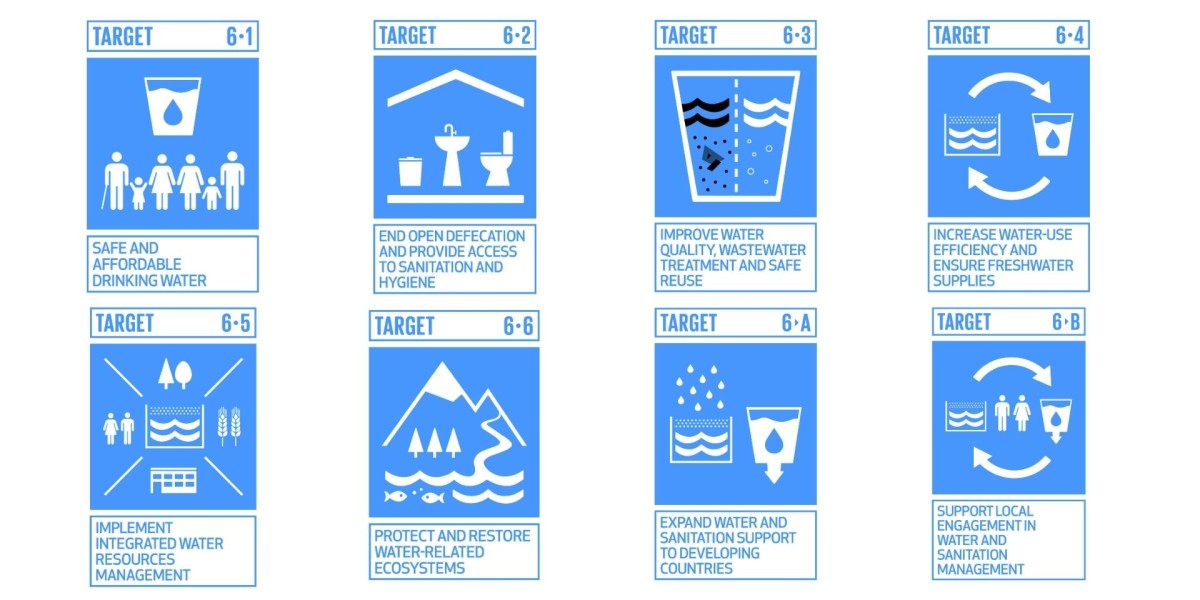
The United Nations Sustainable Development Goals are a set of 17 goals aimed at reaching a sustainable future by 2030. In 2015, all 193 countries of the UN agreed to this agenda. The Sixth Sustainable Development Goal (SDG 6) promises to ensure clean water and sanitation for everyone by 2030.
Currently, 1 in 3 people live without access to safe and working facilities for sanitation, which is causing unnecessary disease and death. SDG 6 focuses on a set of targets to change this, ranging from restoring fragile water ecosystems to ending open defecation and reducing pollution.
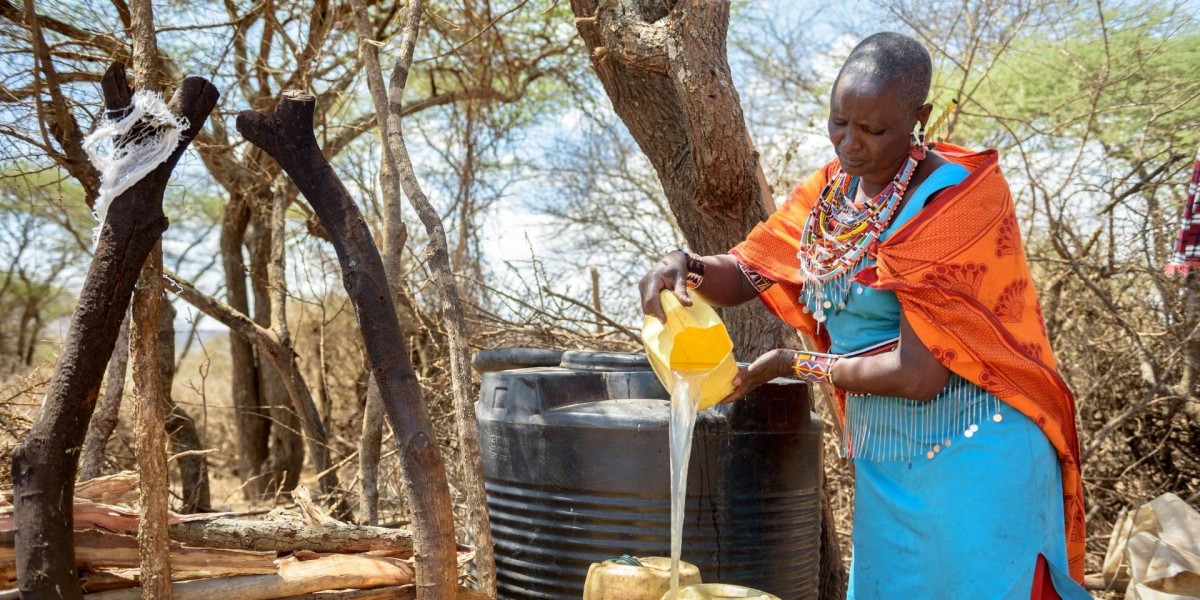
The world is currently off track to meet these goals. Water security is an increasingly unreliable factor in the lives of many. Climate change fuels droughts, floods and scarcity. This instability impacts daily livelihoods. The burden is strongest for vulnerable groups, such as women and girls who must spend hours each day fetching water.
Why is the UNWC important?
Although water is crucial for peace, security, development, food and climate change, there is no international decision-making structure for water. No water treaty, no water council or water tribunal. It remains ‘a blind spot’ in international conferences.
The effect of that is that all states and companies use water as they please, while they should treat water as a global common good.
The UN Water Conference centers water on the global political agenda. It is an attempt to elevate water-related issues on the international agenda and to develop opportunities for global governance of water. It provides a unique space where people who rarely meet - such as Indigenous leaders, private sector CEOs and government ministers - can get a better understanding of each other's motivations and form unforeseen, powerful alliances.
What happened at the UNWC in 2023?
The previous UNWC of 2023 took place at the UN Headquarters in New York. It was co-hosted by The Netherlands and Tajikistan. The conference was opened by our very own King Willem-Alexander. In his speech, he emphasized the significance of water as a common denominator in all of our lives.
'Everything we need to live a decent life is directly related to water. Our health, food, safety, habitat, economy, infrastructure and climate.'
The main outcome of the 2023 conference was the launch of the Water Action Agenda. This plan involves a collection of over 700 commitments by governments, the private sector, and NGOs. They cover financial investments, collaborative projects, and policy shifts aimed at addressing the global water and sanitation crisis. One of these commitments includes the launch of Simavi's Water Justice Fund.
Where will UNWC 2026 take place?
The UN Water Conference of 2026 will be held from 2 until 4 December in Abu Dhabi, United Arab Emirates. The conference is co-hosted with Senegal, where a preparatory meeting takes place in Dakar on 26 and 27 January. At this event, discussions will commence and the design of the UNWC '26 will be determined in detail. As the co-host, Senegal will use this meeting to ensure African countries get a special focus at the UNWC.
What’s on the agenda of UNWC 2026?
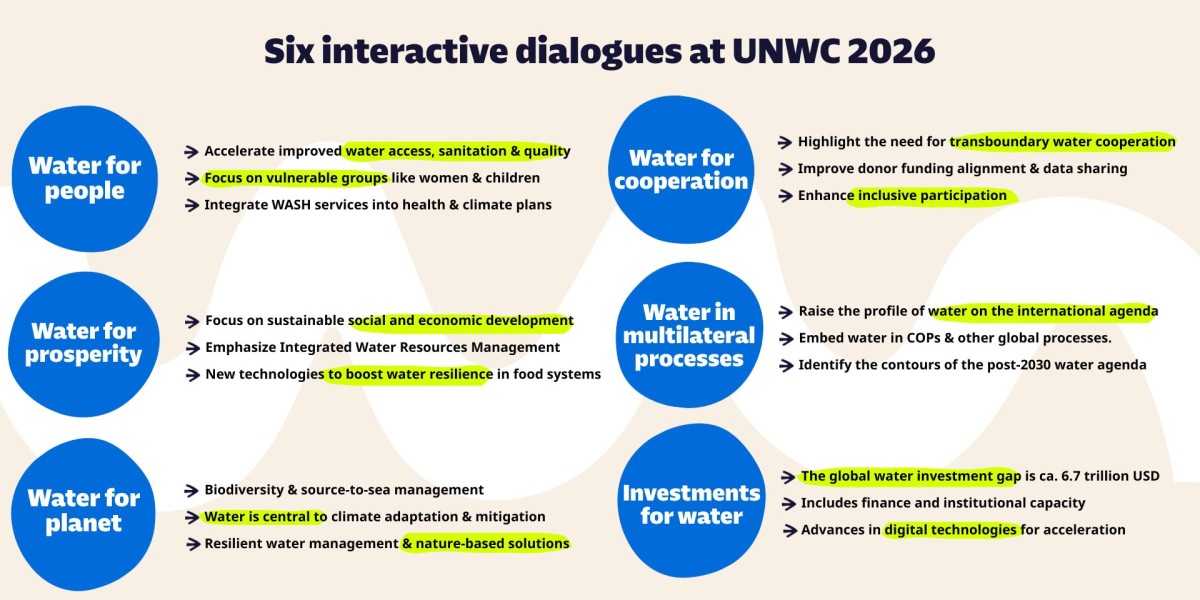
The UNWC agenda involves a set of interactive dialogues, each with a specific thematic approach. The following six dialogues have been confirmed for 2026:
- Water for people
- Water for prosperity
- Water for planet
- Water for cooperation
- Water in multilateral processes
- Investments for water
What will Simavi do at the UNWC?
Together with WaterAid, we aim for the realization of the human right to water and sanitation. More investment platforms should be established in countries where private and public finance can be focused on country-led plans.
Commitments that have been made in previous years on WASH in relation to climate change and health care facilities must be realized by governments and donors.
To understand and support country needs better, civil society groups, women and youth must have a role in all interactive dialogues at UNWC 26 in the UAE.
What did Simavi achieve at UNWC 2023?
At the UNWC in 2023, Simavi launched the Water Justice Fund in support of the Water Action Agenda and the SDG 6 acceleration framework. The fund supports local women's groups in Kenya, Nepal, Bangladesh and Indonesia with small-scale investments to empower them and realize local solutions.
It positions women and girls at the forefront of climate action. The fund uses innovative shared governance and participatory grantmaking mechanisms to shift power and decision-making to the women and girls who are living in remote, underserved, and oppressive environments.
The long-term goals of the Water Justice Fund are:
- The most vulnerable communities are resilient to climate impact and the water crisis with improved access to water and sanitation services
- The voices of women and girls have been empowered and they are seen as important influencers to decision-making and climate adaptation measures
- Activism to put climate adaptation higher on the agenda has been strengthened
Read more about the Water Justice Fund here.
Would you like to stay updated on the UN Water Conference 2026?
Sign up for the WASH Matters newsletter to stay informed on all of WaterAid's policy and advocacy updates.